As of May of 2026, I authored/co-authored 70 peer-reviewed papers (8 published as a first-author, 3 in prep),
h-index: 29
ADS Listing: (link)
First-author Contributions
Ferreira et al. "Galaxy Mergers in UNIONS – II: Predicting Timescales in the
Post-Merger Regime" MNRAS submmited.
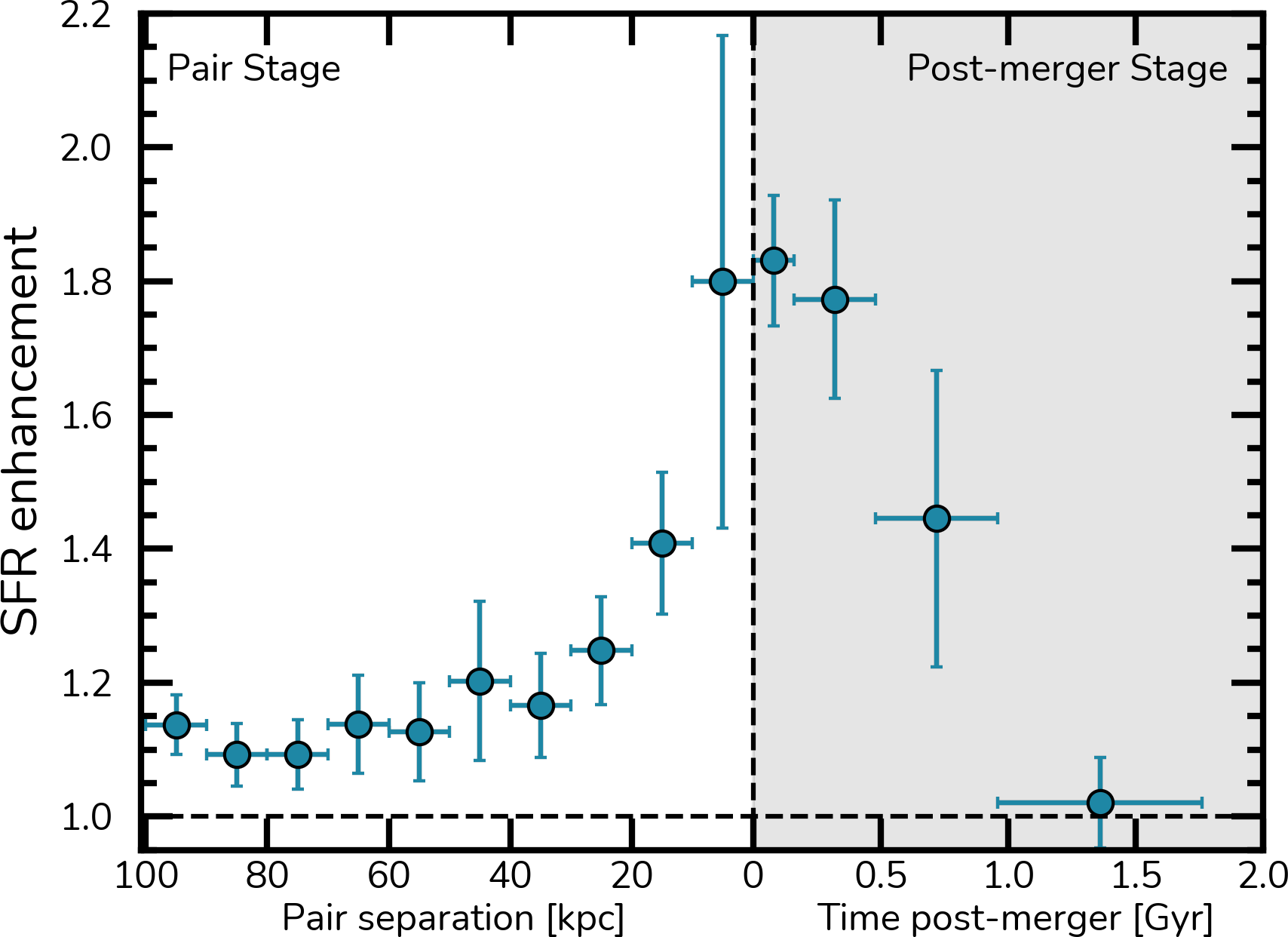
Ferreira et al. "Galaxy evolution in the Post-Merger Regime - I. Most merger-induced in situ stellar
mass growth happens post-coalescence" MNRAS Letters, Volume 538, Issue 1, pp.L31-L36. (link)
SFR Enhancements along the merger sequence.
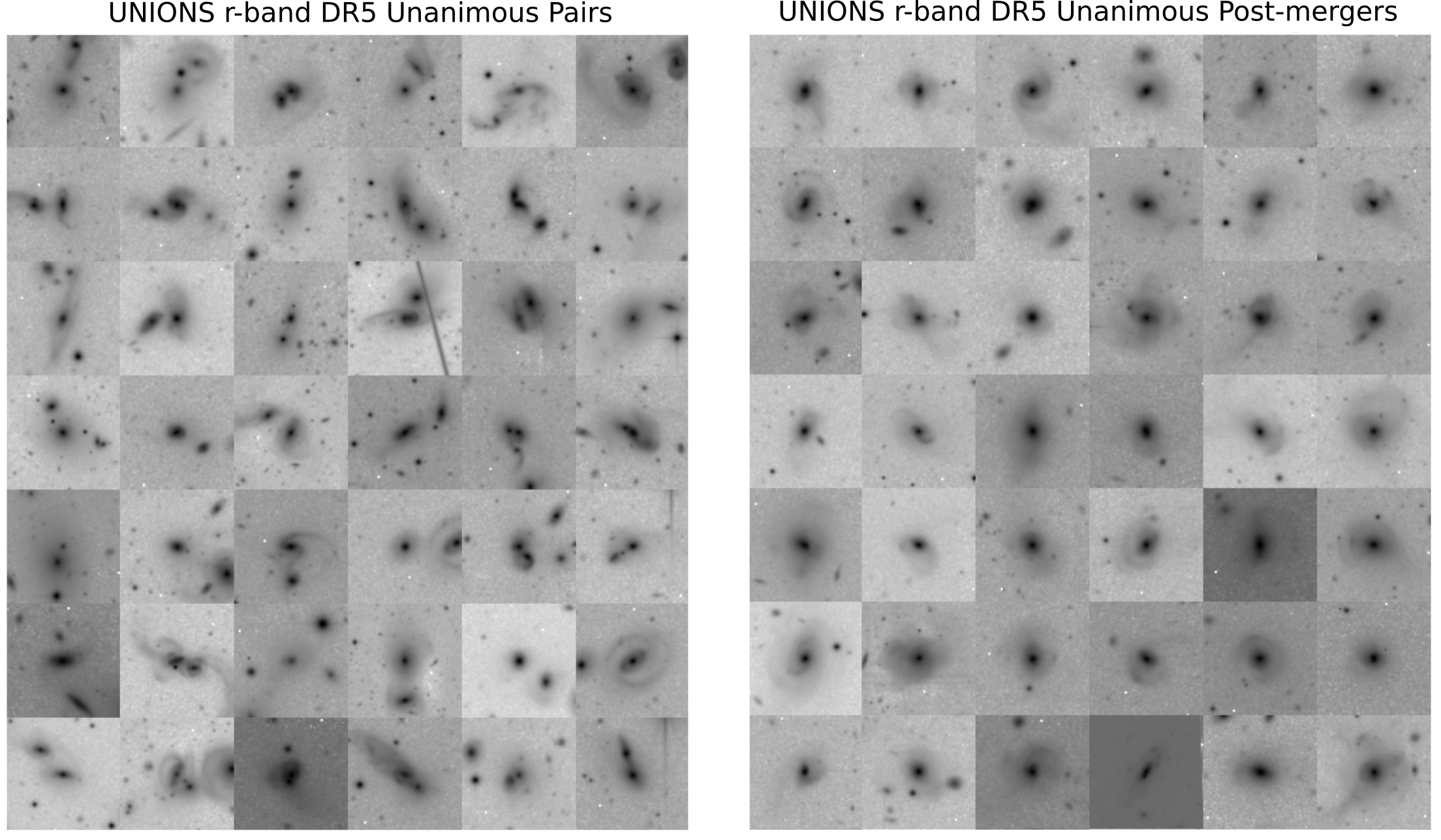
Ferreira et al. "Galaxy Mergers in UNIONS – I: A Simulation-driven Hybrid Deep
Learning Ensemble for Pure Galaxy Merger Classification" MNRAS, Volume 533, Issue 3, pp.2547-2569. (link)
A sample of pairs and post-mergers found with MUMMI.
Ferreira et al. "The JWST Hubble Sequence: The Rest-Frame Optical Evolution of Galaxy Structure at
z=1.5 to 6.5" ApJ, 2023. (link)
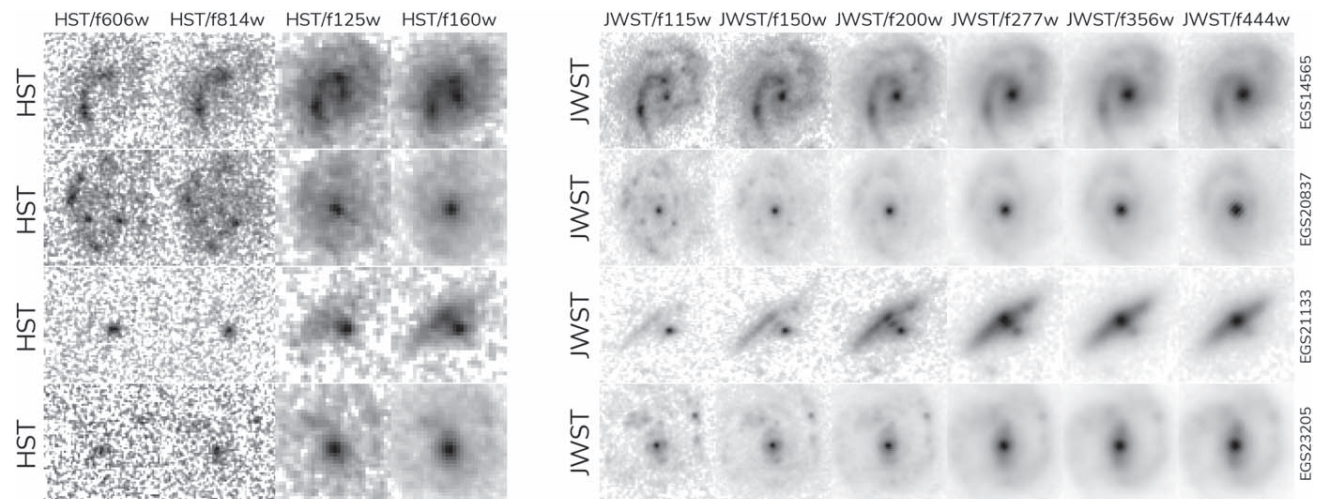
The impact of wavelength coverage for the characterization of high-redshift
galaxies. Comparison between HST and JWST.
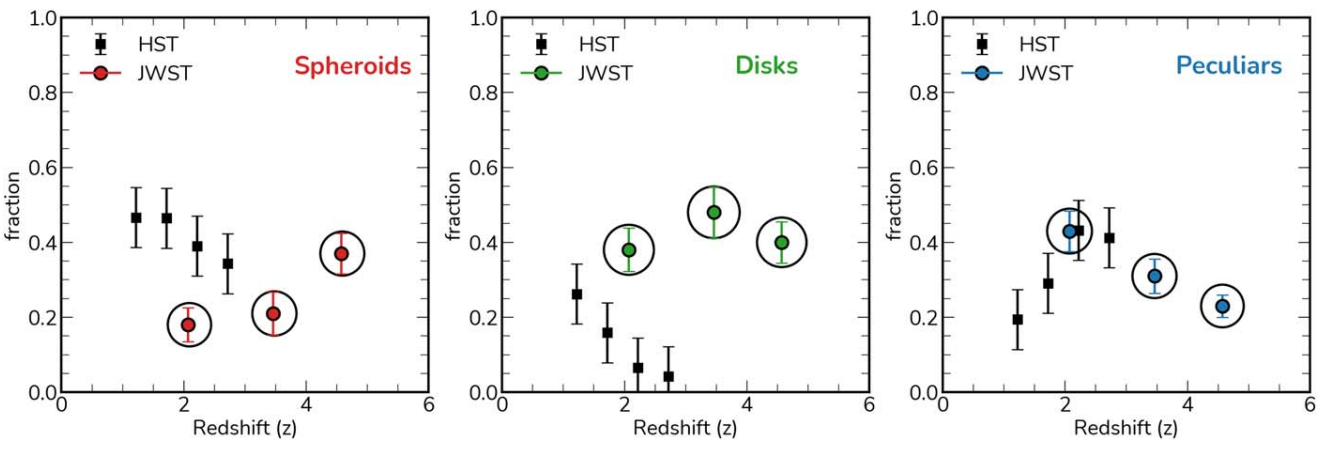
Ferreira et al. "Panic! at the Disks: First Rest-frame Optical Observations of Galaxy Structure at z >
3 with JWST in the SMACS 0723 Field," ApJL, 2022. (link)
The surprising abundance of disk galaxies at high redshift using JWST in
comparison to HST data.
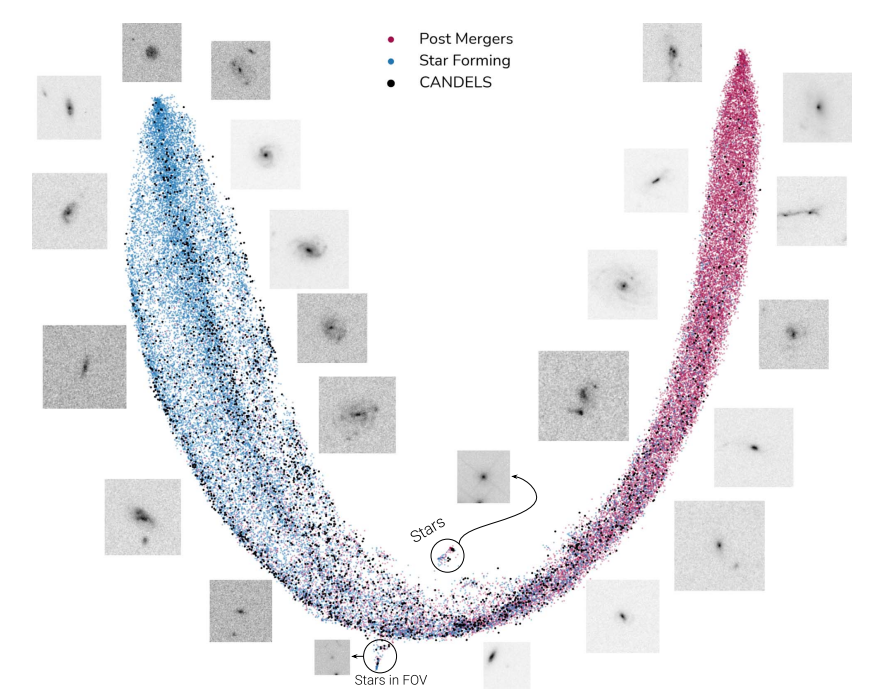
Ferreira, et al. "A Simulation-driven Deep Learning Approach for Separating Mergers and Star-forming
Galaxies: The Formation Histories of Clumpy Galaxies in All of the CANDELS Fields," in ApJ, 2022. (link)
Blind UMAP representations that separate non-merging star-forming galaxies
from post-mergers at high redshift.
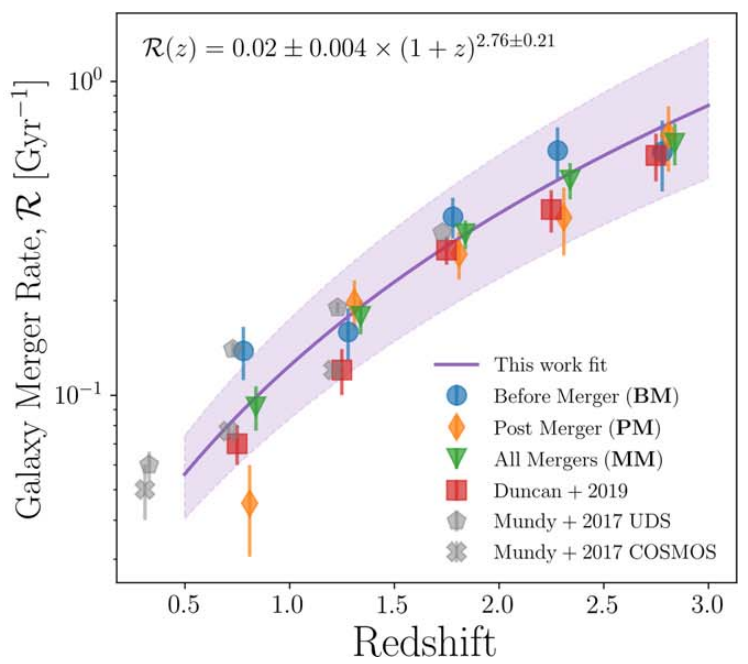
Ferreira et al., "Galaxy Merger Rates up to z~3 Using a Bayesian Deep Learning Model: A Major-merger
Classifier Using IllustrisTNG Simulation Data," in ApJ, 2020. (link)
Galaxy merger rates measured by a blind deep learning model. The first
agreement between merger rates measured from morphology and pair statistics.
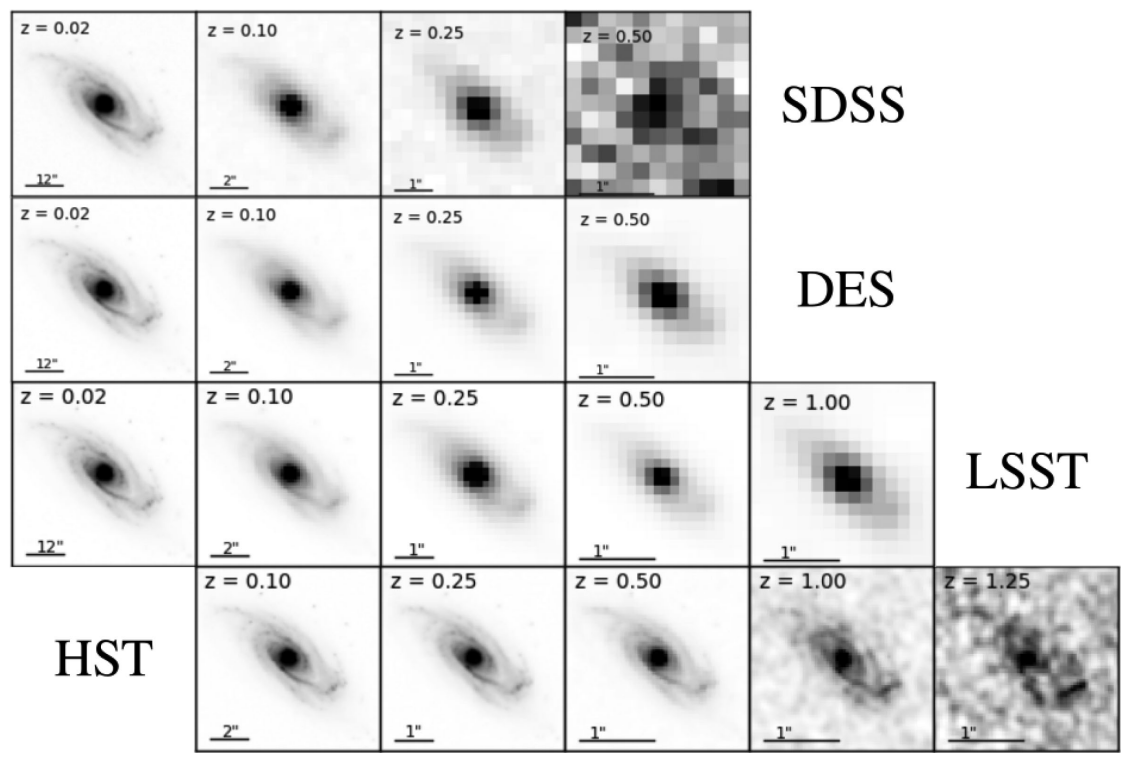
de Albernaz Ferreira L,
and Ferrari F, "The impact of redshift on galaxy morphometric classification: case studies for SDSS, DES,
LSST and HST with Morfometryka," in MNRAS, 2018. (link)
A visual comparison of results of PGC 4992 FERENGI simulations for each of
the targeted instruments. From top to bottom: SDSS, DES, LSST and
HST. The difference in how deep we can resolve structures are evident